
Pile Driving Canada’s Foundations
What is Pile Driving?
Pile driving is the technique of embedding a pile — a braced, structural column — into the ground without first digging it to provide foundational support for bridges, buildings, and highways.
Piles can be made out of concrete, wood, or steel. In deep foundations, piles operate as structural members, transferring the structure's load to the needed depth. A structure can be built in a location that would otherwise be inappropriate due to subsurface conditions by driving piles.
These piles are erected in the ground by being driven, pushed, or otherwise. Pile driving has been used as a construction method since before the dawn of civilization. Driven piles are, in fact, the oldest sort of deep foundation. While the method of driving piles has evolved considerably, the same basic technique is still used to achieve the goal of installing a pile into the ground.

Pile driving usually takes at least a couple of weeks. It's a lengthy procedure, and two weeks is a reasonable estimate assuming the building staff works an eight- to ten-hour day. However, some pile driving projects can take several months to complete.
Pile foundation design is not as tidy and exact as structural design. The interaction between the piles and the surrounding soils adds another layer of complexity to the process, with piles often affecting the character of the soil. As a result, there are often severe strains near the piles.
Pile foundation design and construction can be a difficult process due to the variety of soils and pile grouping and shaping.
Rather than attempting to generalize pile behavior, it makes more sense to focus on understanding the aspects that determine pile foundation design success.
The following main factors must be understood by the foundation engineer:
- Foundation loads
- Subsurface conditions
- The importance of particular design events
- Foundation performance requirements
- Current foundation design and construction
Wire Rope for Piling Rigs
All piling rigs should have flexible leader kinematics, which allow for a wide range of movement in all directions. As a result, choosing the right wire rope is crucial in determining how effective these devices are. The main hoist ropes must be very functional and have enhanced properties. High rotation resistance and high wear and tear resistance should be important characteristics. They must also withstand a number of environmental variables, including temperature (cold and heat). Animal activity (e.g., rodents), dust, and potentially corrosive substances in the environment are all possible hazards.
To cope with the stresses involved in foundation and below ground level engineering projects, piling ropes must have a very high breaking strength and strong fatigue qualities due to the severe conditions in which they operate. Purchasing high-quality crane rope from the start is strongly recommended.

Our Hercules Western branches offer a selection of high quality wire ropes for a wide range of industries and projects — including pile driving.
- Guy Wires and Structural Wire Rope
- Rotation Resistant Wire Rope
- High Performance Crane Rope
- Marine Wire Rope
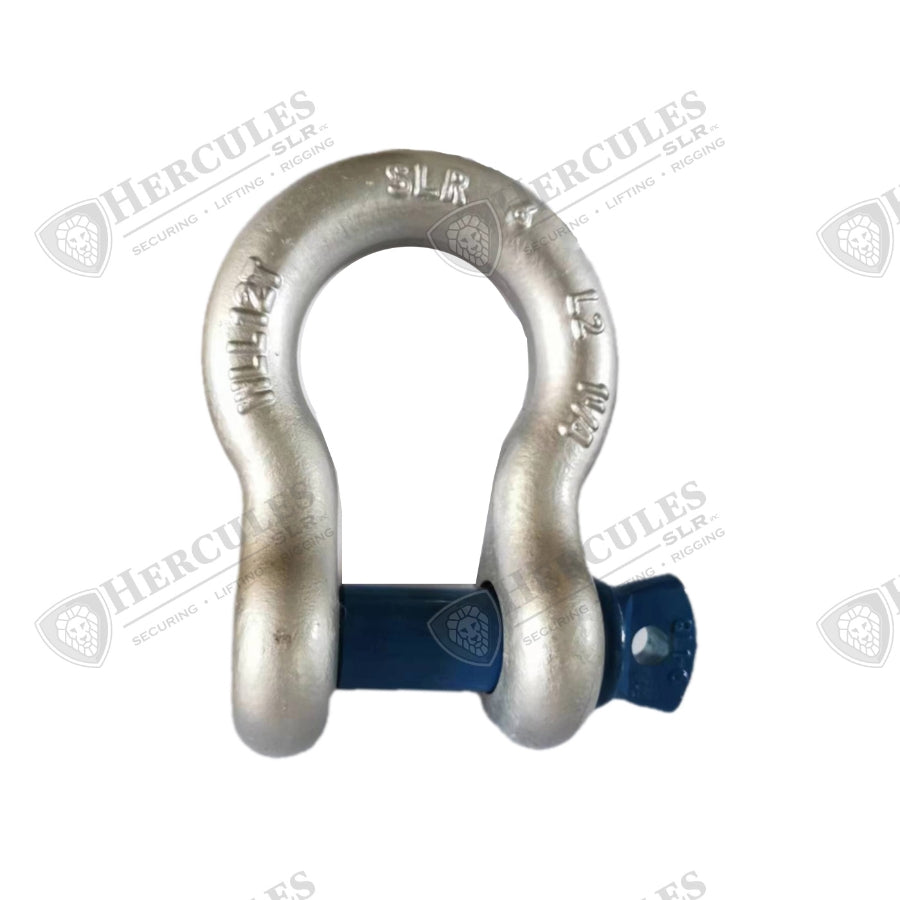
Need Rigging Hardware for Your Next Project?
Browse our full selection of professional-grade rigging hardware built for demanding industrial applications.
Shop Rigging HardwareWhat is a Rotary Drilling Rig?
Rotary Drilling Rig uses a sharp, rotating drill bit and downward pressure to cut or crush through the subsurface. Impact energy is supplied to the drill bit from either an above-ground or down-hole impact hammer. This impact force aids in the drilling. They can be used in deeper depths and are capable of larger diameter holes.

What are the Four Different Hammers Pile Rigs Use?
Diesel Impact Hammer
Diesel impact pile hammers are a type of drop hammer which utilize a two-stroke, or two-cycle, diesel engine. The lightweight hammers are powered through the ignition of a compressed diesel fuel and air mixture. There are four phases of operation:
- The ram is raised, fuel is injected
- Compression: The ram is released and free-falls. The exhaust port closes, which compresses air and fuel together
- Impact and Combustion: The hammer reaches impact with the pile. The air/fuel mixture heats up due to the compression and combusts, or ignites
- Expansion: The ram is driven upwards as a result of the impact with the pile. The ram's rising draws in fresh air, beginning the cycle again until the hammer is manually stopped by the working crew, or until its fuel is depleted.
The free-fall hammer can be used to drive all types of steel piling. This type of pile driving hammer is renowned for its reliability. Additionally, diesel hammers are self-contained (no need for an external power supply) and are capable of reaching between 30–50 blows per minute for closed-end hammers, and 70–80 for open-end hammers.
Vibratory Hammer
Vibratory pile hammers use a spinning technique — a system of counter-rotating weights powered by hydraulic motors — to cut into soil, rather than driving a pile. Vibratory hammers are designed so that the horizontal vibrations of the hammer are canceled out by the vertical vibrations, which are transferred to the pile. This type of pile hammer can also be used up to around 3,300 feet under water.
The hammer is lifted to be positioned over the pile with either an excavator or crane, then secured to the pile with hydraulic clamps. Vibratory pile hammers can be used to both drive piles into and extract piles from the ground. The most common types of piles extracted are sheet piles from temporary cofferdams and pipe pile from crane access trestle.

An advantage of using a vibratory hammer over other types of pile driving hammers is that vibratory hammers operate at a much lower noise level than others. They also tend to drive piles quicker than other hammer types.
Air/Steam Impact Hammer
Air/steam impact pile hammers can be classified as either single-acting or double-acting. These external combustion hammers use an external power source such as air compressors or steam boilers to power the ram upward or downward.
Single-acting air/steam hammers allow air or steam to raise the movable portion of the hammer and allows it to free-fall. This type of impact hammer can be readily used in all soil conditions, with an average of 50–60 blows per minute.
Double-acting air/steam hammers allow air or steam to raise the ram of the hammer and adds additional energy during downstroke for a higher frequency of blows (90–150 per minute). The hammer applies additional air or steam pressure to the top of the piston to enable shorter strokes.
Hydraulic Impact Hammer
Hydraulic impact pile hammers are a modernized version of the diesel impact hammer which use hydraulic power packs as their fuel source. Hydraulic hammers are capable of driving not only steel piles like pipe, sheets, or beams, but also timber and precast concrete piles. Some hydraulic hammers are also capable of reaching up to 80 blows per minute.
In addition to the hydraulic hammer's ability to drive steel, timber, and precast concrete piles, this type of pile hammer is considered more environmentally-friendly than its diesel hammer counterpart. Not only are there no exhaust fumes released into the air, the noise level from a hydraulic hammer is much lower than that of a diesel hammer.
Have a Project in Mind? Talk to Our Team.
Our experts are ready to help you select the right rigging and lifting equipment for your next job site. Get in touch today.
Contact Us